


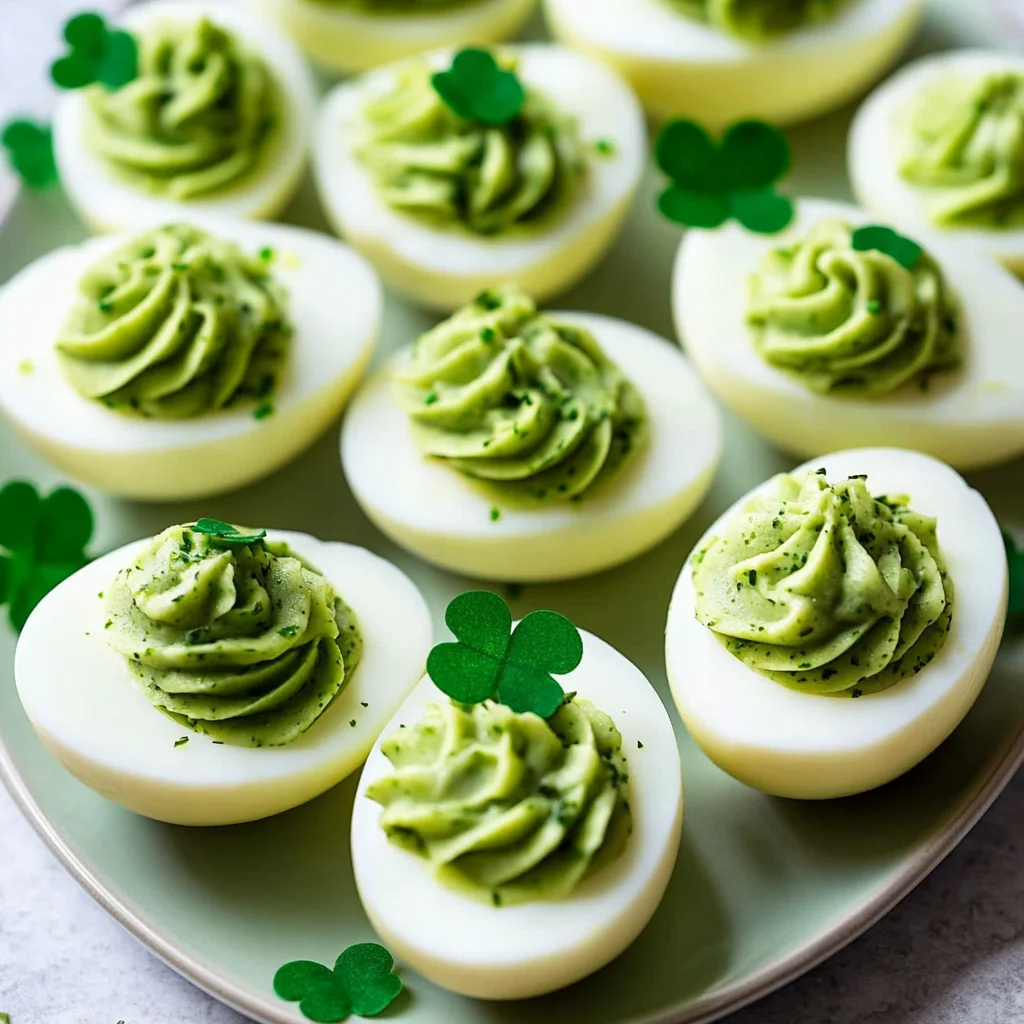
Picture a platter of St Patrick’s Day Deviled Eggs, each one bursting with vibrant green hues and a creamy, tangy filling that dances on your taste buds. The subtle crunch of fresh herbs mingles with the velvety yolk, creating a delightful texture that promises to steal the spotlight at any festive gathering.
These little bites of joy evoke memories of laughter-filled parties, where friends gather around the table, eagerly reaching for the next delicious morsel. Perfect for celebrating the luck of the Irish, these deviled eggs are not just a treat but a whimsical conversation starter that will leave everyone craving more of that unforgettable flavor experience.
Why are St Patrick’s Day Deviled Eggs a must-try?
Unique twist: These deviled eggs bring a festive flair to your table with vibrant green ingredients.
Easy to make: With just a few simple steps, you can whip up a batch in no time!
Delicious flavor: Creamy, tangy filling with hints of herbs and spices will delight every palate.
Crowd-pleaser: Perfect for parties, get-togethers, or as a delightful appetizer that everyone loves!
Versatile: Customize them with toppings like bacon or chives for extra fun!
St Patrick’s Day Deviled Eggs Ingredients
For the Eggs:
- 6 large eggs – Hard-boiled eggs are the foundation for this creamy dish; ensure they’re fresh for best results
- 1/4 cup mayonnaise – Adds creaminess; Greek yogurt can be a healthier substitute
- 1 teaspoon Dijon mustard – Provides a tangy kick; yellow mustard works in a pinch
- 1/4 teaspoon salt – Enhances flavor; adjust to taste based on dietary needs
For the Green Garnish:
- 2 tablespoons fresh chives (chopped) – Offers a mild onion flavor that pairs beautifully with eggs
- 1 tablespoon fresh parsley (chopped) – Brightens the dish visually and adds a fresh taste
- 1/2 teaspoon paprika – Sprinkle on top for color and subtle smokiness, or use cayenne for heat
For the Colorful Touch:
- 1/2 avocado (mashed) – Adds creaminess and a vibrant green color; lime juice can prevent browning if made ahead
- 1 tablespoon lime juice – Enhances flavor and keeps the avocado from oxidizing, maintaining its bright hue
Enjoy these festive St Patrick’s Day Deviled Eggs as a delightful treat at your celebration!
How to Make St Patrick’s Day Deviled Eggs
1. Boil: Place a dozen eggs in a saucepan, cover with water, and bring to a boil over medium heat. Once boiling, cover and let them simmer for 10 minutes.
2. Cool: Remove the eggs from heat and transfer them to an ice bath. Let them sit for about 5-10 minutes until cool enough to handle. This helps with peeling!
3. Peel: Gently tap each egg on the counter to crack the shell, then peel under running water for easier removal. Set aside your perfectly peeled eggs on a paper towel.
4. Slice: Carefully slice each egg in half lengthwise, and scoop out the yolks into a mixing bowl. Arrange the egg whites on a serving platter.
5. Mix: For the Filling: Mash the yolks with mayonnaise, mustard, salt, and pepper until creamy and smooth. For a festive touch, add green food coloring or finely chopped herbs.
6. Fill: Spoon or pipe the yolk mixture back into each egg white half, creating generous mounds of that vibrant filling that screams St Patrick’s Day spirit!
7. Garnish: Sprinkle with paprika or fresh chives for color and flavor. You can also add tiny shamrock cutouts made from veggies as a playful decoration.
Optional: Top with crispy bacon bits for an extra savory crunch!
Exact quantities are listed in the recipe card below.
Expert Tips for St Patrick’s Day Deviled Eggs
- Perfectly Boiled Eggs: Use fresh eggs and boil them gently to avoid a green ring around the yolk. This ensures vibrant yellow filling for your St Patrick’s Day Deviled Eggs.
- Cool Down Quickly: After boiling, transfer eggs to an ice bath immediately. Rapid cooling prevents overcooking and makes peeling easier.
- Smooth Filling: For a creamy consistency, use a food processor to blend the yolks with mayo and mustard until smooth, avoiding any lumps in your deviled egg mixture.
- Seasoning Matters: Taste your filling before piping it into the whites. Adjust salt, pepper, or even add a dash of hot sauce for that extra zing in your St Patrick’s Day Deviled Eggs.
- Garnish Wisely: Fresh herbs or colorful toppings not only enhance presentation but also elevate flavor. Consider chives or paprika for a festive touch!
Storage Tips for St Patrick’s Day Deviled Eggs

- Fridge: Store your St Patrick’s Day Deviled Eggs in an airtight container for up to 3 days to maintain freshness and flavor.
- Room Temperature: It’s best not to leave deviled eggs out for more than 2 hours, especially if they contain mayonnaise or dairy.
- Freezer: While it’s not recommended to freeze deviled eggs due to texture changes, you can freeze the egg yolk mixture separately. Thaw it in the fridge before reassembling.
- Reheating: If you’ve made extra filling, gently reheat it in the microwave at low power, stirring frequently until warmed.
St Patrick’s Day Deviled Eggs Variations
Customize these delightful bites to suit your family’s tastes and dietary needs with a few simple twists!
- Avocado: Swap out half the mayo for mashed avocado for a creamy, green twist. The avocado adds a rich texture and healthy fats, making them even more satisfying.
- Bacon Bits: Add crispy bacon bits for a smoky flavor. The crunch of the bacon complements the creaminess of the filling perfectly, ensuring every bite is a savory delight.
- Spicy Mustard: Use spicy brown mustard instead of regular mustard for an extra kick. This adds an exciting layer of flavor that will awaken your taste buds with every mouthful.
- Herb Infusion: Mix in fresh herbs like dill or chives for added freshness. The vibrant green herbs not only enhance the taste but also make these eggs visually appealing on your St. Patrick’s Day table.
- Pickle Relish: Stir in some pickle relish for a tangy crunch. This unexpected addition brightens the filling and offers a delightful contrast to the egg’s richness.
- Sriracha Drizzle: Top each egg with a drizzle of Sriracha for heat lovers. This fiery touch brings an exciting flavor profile that balances beautifully with the creamy filling.
- Smoked Paprika: Sprinkle smoked paprika on top before serving for a pop of color and flavor. Its warm, smoky notes elevate your deviled eggs, making them truly special.
- Vegan Option: Replace eggs with chickpeas and use vegan mayo for a plant-based twist. Blend them together until smooth; they’ll be just as creamy and delicious!
Make Ahead Options
St Patrick’s Day Deviled Eggs are perfect for meal prep, allowing you to enjoy the festive flavors without the last-minute rush. To make your planning easier, you can boil and peel the eggs up to 3 days in advance, storing them in a covered container submerged in water to keep them fresh. The egg yolk mixture can also be prepared 24 hours ahead—just mix the yolks with mayonnaise, mustard, and spices, then store it in an airtight container in the refrigerator. When you’re ready to serve, simply fill each egg white with the yolk mixture and garnish as desired. This way, you save time while ensuring your St Patrick’s Day Deviled Eggs are flavorful and ready to impress!
St Patrick’s Day Deviled Eggs Recipe FAQs
What type of eggs are best for deviled eggs?
For deviled eggs, it’s always best to use slightly older eggs, ideally 7-10 days old. This makes peeling them after boiling much easier! Fresh eggs can be tricky and often stick to the shell, leaving you with a less-than-perfect presentation.
How should I store leftover deviled eggs?
Store your leftover St Patrick’s Day deviled eggs in an airtight container in the refrigerator. They will stay fresh for about 2-3 days. Just make sure to cover them well to prevent any odors from the fridge from seeping in!
Can I freeze deviled eggs?
It’s not recommended to freeze deviled eggs, as the texture of the filling can become grainy when thawed. However, if you have leftover egg whites (after making your filling), you can freeze those! Just place them in a freezer-safe bag with the date labeled; they can last up to 6 months.
What should I do if my yolks are crumbly?
If your yolks turn out crumbly, don’t worry! You can add a bit more mayonnaise or sour cream to help smooth out the filling. Sometimes, using a fork instead of a food processor for mixing can create a better texture too. Aim for a creamy consistency that’s easy to pipe or spoon back into the egg whites.
Are there any dietary alternatives I can use for deviled eggs?
Absolutely! If you’re looking for a lighter version, substitute Greek yogurt for mayonnaise—it adds a nice tang and is lower in calories. For vegan options, try using mashed avocado or silken tofu mixed with mustard and spices instead of traditional fillings. Your guests will love these creative twists!
How long do I need to boil the eggs for perfect hard-boiled results?
For perfectly hard-boiled eggs, bring your water to a rolling boil first, then gently add your cold eggs. Boil them for about 9-12 minutes depending on how firm you like your yolks. After boiling, plunge them into an ice water bath immediately; this helps stop cooking and makes peeling easier—plus, it gives you that beautiful green yolk ring we all love!
St Patrick’s Day Deviled Eggs
Ingredients
Method
- Place a dozen eggs in a saucepan, cover with water, and bring to a boil over medium heat. Once boiling, cover and let them simmer for 10 minutes.
- Remove the eggs from heat and transfer them to an ice bath. Let them sit for about 5-10 minutes until cool enough to handle.
- Gently tap each egg on the counter to crack the shell, then peel under running water for easier removal.
- Carefully slice each egg in half lengthwise, and scoop out the yolks into a mixing bowl. Arrange the egg whites on a serving platter.
- Mash the yolks with mayonnaise, mustard, salt, and pepper until creamy and smooth. Optionally, add green food coloring or finely chopped herbs.
- Spoon or pipe the yolk mixture back into each egg white half, creating generous mounds of filling.
- Sprinkle with paprika or fresh chives for color and flavor. Optionally, add tiny shamrock cutouts made from veggies.


Leave a Comment