


Imagine sinking your teeth into a slice of warm, gooey chocolate cake that melts in your mouth, its rich aroma wrapping around you like a cozy blanket. The perfect blend of sweet and slightly bitter flavors dances on your taste buds, while the velvety texture brings a smile to your face, making it an unforgettable treat for any occasion.
I still remember the first time I baked this cake with my grandmother, flour flying everywhere as we laughed and shared stories over the mixing bowl. It’s a delightful dessert that transforms ordinary moments into cherished memories, whether it’s a birthday celebration or just a cozy night in. Get ready to embark on a flavor journey that promises pure indulgence!
Why are spring vegetables a must-try?
Delightful flavors! This recipe showcases the vibrant taste of spring vegetables, making every bite a celebration of the season.
Quick and easy! With minimal prep time, you can whip this up in no time—perfect for busy weeknights.
Versatile options! Feel free to mix and match your favorite veggies for a personalized twist.
Crowd-pleaser! Serve it at gatherings, and watch everyone rave about this colorful dish.
Healthy choice! Packed with nutrients, it’s a guilt-free indulgence that nourishes both body and soul.
Spring Vegetables Ingredients
For the Salad
- Asparagus – a fresh, crisp addition that highlights the essence of spring vegetables.
- Radishes – their peppery crunch adds a delightful contrast to the tender greens.
- Peas – sweet and vibrant, they bring a burst of color and flavor to your dish.
- Baby Spinach – tender and nutritious, it’s the perfect base for showcasing fresh spring vegetables.
For the Dressing
- Olive Oil – use high-quality extra virgin for an aromatic finish that complements the vegetables beautifully.
- Lemon Juice – freshly squeezed adds a zesty brightness that enhances the flavors of your spring vegetables.
- Honey – a touch of sweetness balances the acidity and brings all the tastes together.
For Garnish
- Feta Cheese – crumbled feta adds a creamy, salty note that elevates your salad to new heights.
- Fresh Herbs (like dill or parsley) – sprinkle them on top for an aromatic freshness that ties all elements together.
Tips for Perfect spring vegetables
1. Prep your veggies: Start by washing and trimming your spring vegetables. Think bright asparagus, vibrant peas, and tender radishes. Aim for uniform pieces to ensure even cooking.
2. Blanch for brightness: Bring a pot of salted water to a boil. Add the vegetables and blanch them for about 2-3 minutes until they’re bright and slightly tender. This enhances their color and flavor!
3. Shock in ice bath: Immediately transfer the blanched vegetables to a bowl of ice water. This stops the cooking process and keeps them crisp and colorful—perfect for your dish!
4. Sauté for flavor: Heat a drizzle of olive oil in a skillet over medium heat. Add the blanched spring vegetables, sautéing for about 5 minutes until they’re warmed through and fragrant.
5. Season generously: Sprinkle salt, pepper, and any favorite herbs over the veggies while sautéing. Fresh dill or parsley work wonders to elevate their natural flavors!
Optional: Drizzle with lemon juice before serving for an extra zing.
Exact quantities are listed in the recipe card below.
Expert Tips for spring vegetables
- Choose Fresh Produce: Look for vibrant colors and firm textures when selecting spring vegetables; this indicates freshness and optimal flavor.
- Proper Storage: Store your spring vegetables in a cool, moist environment. Avoid washing them until you’re ready to use them to prevent spoilage.
- Cook with Care: Lightly steaming or sautéing spring vegetables preserves their bright colors and nutrients. Overcooking can lead to mushy texture and loss of flavor.
- Season Wisely: Enhance the natural flavors of spring vegetables with simple seasonings like olive oil, lemon juice, or fresh herbs; avoid overwhelming spices that mask their freshness.
- Mix and Match: Create a colorful medley by combining different spring vegetables. This not only boosts flavor but also makes your dishes visually appealing.
How to Store and Freeze spring vegetables

- Room Temperature: Most spring vegetables, like radishes and asparagus, can be stored at room temperature for up to 1 day. Keep them in a cool, dark place, away from direct sunlight.
- Fridge: Store leafy greens and delicate vegetables in the fridge for up to 5 days. Place them in a breathable bag or container to maintain crispness and prevent wilting.
- Freezer: For long-term storage, blanch spring vegetables like peas and green beans before freezing. They can last up to 8 months in airtight containers or freezer bags without losing flavor.
- Reheating: When ready to use frozen spring vegetables, thaw them overnight in the fridge or use the microwave on low. Reheat gently on the stove or in a steamer for best results.
Spring Vegetables: Exciting Twists Await
Feel free to play around with these delightful ideas to make the dish your own!
- Dairy-Free: Substitute regular cheese with a nut-based alternative for a creamy, plant-based version. This swap keeps the flavors rich without compromising on taste.
- Spicy Kick: Add red pepper flakes or diced jalapeños for an extra layer of heat. Just a pinch can elevate your dish, giving it a vibrant zing that dances on your palate.
- Herb Boost: Incorporate fresh herbs like basil or dill for a fragrant finish. The right herbs can transform the dish, infusing it with freshness and making every bite feel like spring.
- Grain Swap: Replace quinoa with farro or barley for added texture and nuttiness. Each grain brings its unique charm, creating a heartier meal that satisfies.
- Zesty Citrus: Squeeze in some lemon or lime juice before serving to brighten the flavors. The citrus adds an uplifting note that enhances the earthiness of the vegetables beautifully.
- Roasted Flavor: Try roasting your vegetables instead of steaming them for a caramelized taste. This method brings out their natural sweetness, creating a lovely contrast in textures.
- Protein Boost: Toss in chickpeas or white beans for additional protein and fiber. These legumes make the dish more filling while adding an earthy taste that complements the spring produce perfectly.
- Sweet Surprise: Add a handful of peas or diced carrots for subtle sweetness. Their natural sugars create a delightful contrast against savory elements, making each bite deliciously balanced.
Make Ahead Options
Preparing spring vegetables for your meals is not only convenient but also a delightful way to savor the season’s fresh flavors. For optimal meal prep, you can chop and store your spring vegetables—like asparagus, peas, and radishes—in airtight containers up to 3 days in advance. Simply wash and trim the veggies, then keep them in the fridge to retain their crispiness. When you’re ready to cook, just toss them into your favorite sauté or salad. To ensure they maintain their vibrant colors and textures, avoid dressing them until serving. With this simple make-ahead approach, you’ll save precious time while enjoying the bright tastes of spring vegetables throughout the week!
spring vegetables Recipe FAQs
How do I choose the best spring vegetables?
Look for vibrant colors and firm textures when selecting your spring vegetables. For instance, asparagus should be bright green with tightly closed tips, while peas should feel plump in their pods. If you can, buy them locally or at farmers’ markets to ensure freshness—nothing beats the taste of just-picked produce!
What is the best way to store spring vegetables?
Most spring vegetables, like asparagus and spinach, thrive in the fridge. Wrap asparagus in a damp paper towel and place it upright in a glass with water; it can last up to a week this way! For leafy greens, keep them in a breathable bag or container with a little moisture to maintain crispness for about 4-5 days. Avoid washing them until you’re ready to use them to prevent spoilage.
Can I freeze spring vegetables?
Yes! Freezing is a great way to enjoy spring vegetables year-round. Blanch them first by boiling for 1-3 minutes (depending on the vegetable), then plunge them into ice water to stop cooking. Drain well, pack them into airtight containers or freezer bags, and they should last about 8-12 months in the freezer without losing their flavor or texture.
What if my spring vegetables are turning yellow or wilting?
If you notice your veggies wilting or turning yellow, it’s usually a sign they’re past their prime. Don’t despair! You can often revive wilted greens by soaking them in cold water for about 30 minutes. For yellowing veggies, check for any soft spots; if they seem okay otherwise, consider using them in soups or stir-fries where flavors can blend beautifully.
Are there any dietary considerations I should keep in mind with spring vegetables?
Spring vegetables are generally low in calories and high in vitamins, but if you’re watching sodium intake due to health reasons, opt for fresh over canned options. Also, pay attention to potential allergies—some individuals may react to specific greens like arugula or radishes. Always wash your veggies thoroughly to avoid pesticide residues!
Can I use frozen spring vegetables instead of fresh ones?
Absolutely! Frozen spring vegetables can be a convenient alternative when fresh ones aren’t available. They retain most of their nutrients and flavors since they’re often flash-frozen soon after harvest. Just remember that cooking times may vary slightly; add frozen veggies directly into your recipes without thawing for best results!
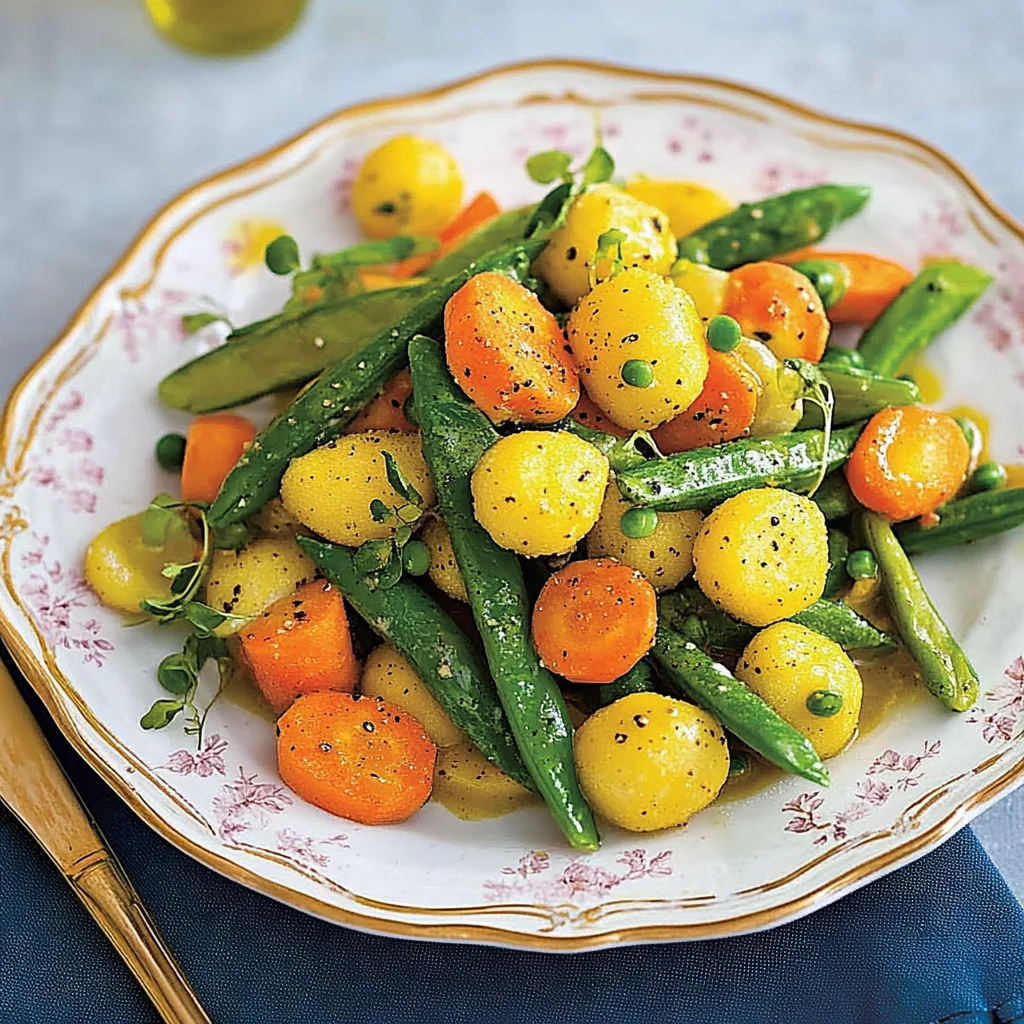
Spring Vegetable Salad
Ingredients
Method
- Wash and trim the spring vegetables to ensure uniform pieces.
- Bring a pot of salted water to a boil and blanch the vegetables for 2-3 minutes.
- Transfer the blanched vegetables to a bowl of ice water to stop the cooking process.
- Heat olive oil in a skillet over medium heat and sauté the blanched vegetables for about 5 minutes.
- Season with salt, pepper, and fresh herbs while sautéing.
- Drizzle the dressing over the sautéed vegetables and toss gently.
- Garnish with crumbled feta cheese and fresh herbs before serving.



Leave a Comment