


Imagine sinking your teeth into a warm, gooey chocolate chip cookie, the rich aroma wafting through the kitchen like a comforting hug. Each bite delivers a blissful explosion of melty chocolate and buttery goodness, making it impossible to resist going back for another.
Growing up, these cookies were the highlight of family gatherings, often paired with laughter and stories shared over milk. Whether it’s a cozy rainy afternoon or a festive celebration, the magic of fresh-baked cookies brings everyone together, promising an unforgettable taste experience that sparks joy in every crumb.
Why are spring salads a must-try?
Fresh ingredients come together for a burst of flavor that screams spring!
Easy to make, this recipe requires minimal prep time—perfect for busy days.
Versatile options allow you to mix and match toppings, catering to every taste.
Crowd-pleaser appeal ensures your friends and family will be asking for seconds!
Experience the vibrant colors and textures that make every bite a delight!
Spring Salads Ingredients
For the Greens
- Mixed greens – a vibrant blend adds a refreshing crunch to your spring salads.
- Arugula – its peppery flavor enhances the overall taste, making it an exciting base.
For the Veggies
- Cherry tomatoes – their sweetness pops beautifully against the other ingredients.
- Cucumber – adds a crisp texture that balances out richer flavors in your salad.
- Radishes – they introduce a delightful zing that livens up your dish.
For the Dressing
- Olive oil – use high-quality extra virgin for the best flavor in your spring salads.
- Balsamic vinegar – brings a tangy sweetness that complements fresh veggies perfectly.
For the Toppings
- Feta cheese – crumbled feta adds creaminess and a salty kick to your salad.
- Toasted nuts – almonds or walnuts provide satisfying crunch and healthy fats.
Tips for Perfect spring salads
1. Start with Fresh Greens: Choose vibrant, crisp greens like arugula, spinach, or mixed baby greens as your base. This will set the tone for a refreshing spring salad.
2. Add Colorful Veggies: Toss in a rainbow of vegetables such as cherry tomatoes, radishes, and cucumbers. Their bright hues not only enhance the look but also add crunch and flavor.
3. Incorporate Fruits: Think strawberries, oranges, or apples for a sweet burst. Slice them thinly and layer them over your greens to create a beautiful contrast in flavors and textures.
4. Sprinkle on Nuts or Seeds: For added crunch and nutrition, sprinkle a handful of toasted nuts or seeds like almonds or sunflower seeds. They provide texture and healthy fats that make your salad satisfying.
5. Drizzle with Dressing: Whisk together olive oil, vinegar, and seasonings to create a light dressing. Drizzle it over your salad just before serving to keep everything fresh and crisp.
Optional: Top with crumbled feta or goat cheese for an extra creamy touch.
Exact quantities are listed in the recipe card below.
Tips for the Best spring salads
- Fresh Ingredients: Use seasonal produce for vibrant flavors. Spring vegetables like asparagus and peas add a delightful crunch to your salads.
- Dressings Matter: Avoid heavy dressings that mask fresh flavors. A simple vinaigrette enhances the natural taste of your spring salads beautifully.
- Texture Variety: Combine crunchy, creamy, and chewy elements. Nuts, cheese, or grains can elevate your salad’s texture and keep every bite interesting.
- Avoid Overmixing: Gently toss your salad just before serving. Overmixing can bruise delicate greens, making them wilted instead of crisp.
- Seasonal Pairings: Pair fruits with greens for a refreshing twist. Strawberries or citrus fruits complement leafy greens perfectly in spring salads.
Storage Tips for spring salads

Room Temperature: Keep your spring salads at room temperature for no more than 2 hours. After that, refrigerate to maintain freshness and flavor.
Fridge: Store your spring salads in an airtight container in the fridge for up to 3 days. This helps keep the ingredients crisp and vibrant.
Freezer: It’s best not to freeze spring salads, as the textures of fresh greens can become mushy. Instead, prepare them fresh when ready to enjoy.
Reheating: If you have any leftover cooked components (like grains or proteins), you can reheat them gently in the microwave. Just remember, fresh greens should be added just before serving!
Spring Salads: Fresh Twists Await
Feel free to explore your creativity and make this dish your own with delightful substitutions and variations!
- Grain-Based: Swap leafy greens for quinoa or farro for a heartier salad. This adds a nutty flavor and chewy texture that elevates every bite.
- Vegan: Replace cheese with avocado or nuts for creaminess. Mixing in some toasted almonds or walnuts adds both crunch and richness, making it satisfying without dairy.
- Spicy Kick: Add sliced jalapeños or a pinch of red pepper flakes for heat. A hint of spice brightens the flavors and keeps things exciting on the palate.
- Herbaceous Boost: Toss in fresh herbs like dill or basil for aromatic freshness. The vibrant notes from herbs bring your spring salad to life, making each forkful a fragrant experience.
- Citrus Zest: Incorporate citrus segments like oranges or grapefruit for added sweetness. Their juicy bursts create a refreshing contrast, making your salad sing with sunny brightness.
- Crunch Factor: Include toasted seeds like pumpkin or sunflower for extra crunch. The delightful crackle brings texture and a satisfying bite that complements the softer salad ingredients.
- Sweet Addition: Drizzle honey or maple syrup over the top for a touch of sweetness. Just a little can transform the entire flavor profile, balancing savory ingredients beautifully.
- Protein-Packed: Add grilled chicken, chickpeas, or tofu to make your salad more filling. These additions not only enhance nutrition but also offer various textures to enjoy with each mouthful.
Make Ahead Options
Spring salads are perfect for meal prep, allowing you to savor fresh flavors without the last-minute rush. To get a head start, wash and chop your greens (like arugula or spinach) up to 24 hours in advance and store them in an airtight container lined with a paper towel to absorb moisture. You can also prepare crunchy toppings such as sliced radishes, cucumbers, and bell peppers three days ahead; just keep them in separate containers to maintain their crispness. For dressings, whisk together your vinaigrette and refrigerate it for up to a week. When you’re ready to enjoy your spring salad, simply combine all the components, drizzle with dressing, and toss gently for a vibrant and refreshing meal!
spring salads Recipe FAQs
How do I choose ripe ingredients for my spring salads?
For the freshest and tastiest spring salads, look for vibrant, crisp vegetables. Choose leafy greens like arugula or spinach that are bright green and firm to the touch. For cucumbers and bell peppers, opt for ones that feel heavy for their size and have smooth, unblemished skins. Seasonal produce, like radishes and peas, should be firm and colorful—this tells you they’re at their peak!
What’s the best way to store leftover spring salad?
To keep your spring salad fresh, store any leftovers in an airtight container in the fridge. It’s best to separate the dressing from the salad to prevent sogginess; this way, it can last up to 3 days. If you’ve mixed them together already, try to eat it within 1-2 days for optimal freshness. When you’re ready to enjoy it again, give it a good toss and maybe add a sprinkle of fresh lemon juice!
Can I freeze my spring salad?
Freezing isn’t ideal for most salads since they contain high-water content ingredients like lettuce and cucumbers; they’ll turn mushy when thawed. However, if you’ve made a grain-based salad with quinoa or farro as a base (and no greens), you can freeze that! Just portion it out in freezer-safe bags or containers and it can last up to 3 months. Thaw in the fridge overnight before serving.
What should I do if my spring salad tastes bland?
If your salad lacks flavor, consider adding a splash of acidity with lemon juice or vinegar; this can brighten everything up! Additionally, try incorporating herbs like basil or mint for freshness. A sprinkle of sea salt or a dash of pepper can also enhance flavors dramatically. Remember, seasoning is key—taste as you go until you hit that perfect balance!
Are there any dietary considerations I should keep in mind when preparing spring salads?
Absolutely! If you’re catering to specific diets, consider using gluten-free grains like quinoa or brown rice as a base instead of pasta or couscous. For vegan options, ensure your dressings are free from dairy. If someone has nut allergies, be cautious with toppings like nuts or seeds. Always check labels on packaged ingredients to avoid hidden allergens!
How long can I keep homemade dressing for my spring salads?
Homemade dressings usually last about 5-7 days in the fridge when stored in an airtight container. Oil-and-vinegar-based dressings tend to hold up better than creamy ones because they don’t contain dairy. Always give your dressing a shake before using it again—it might separate a bit but that’s completely normal! If your dressing has vivid colors or strong scents after a week, it’s best to err on the side of caution and discard it.
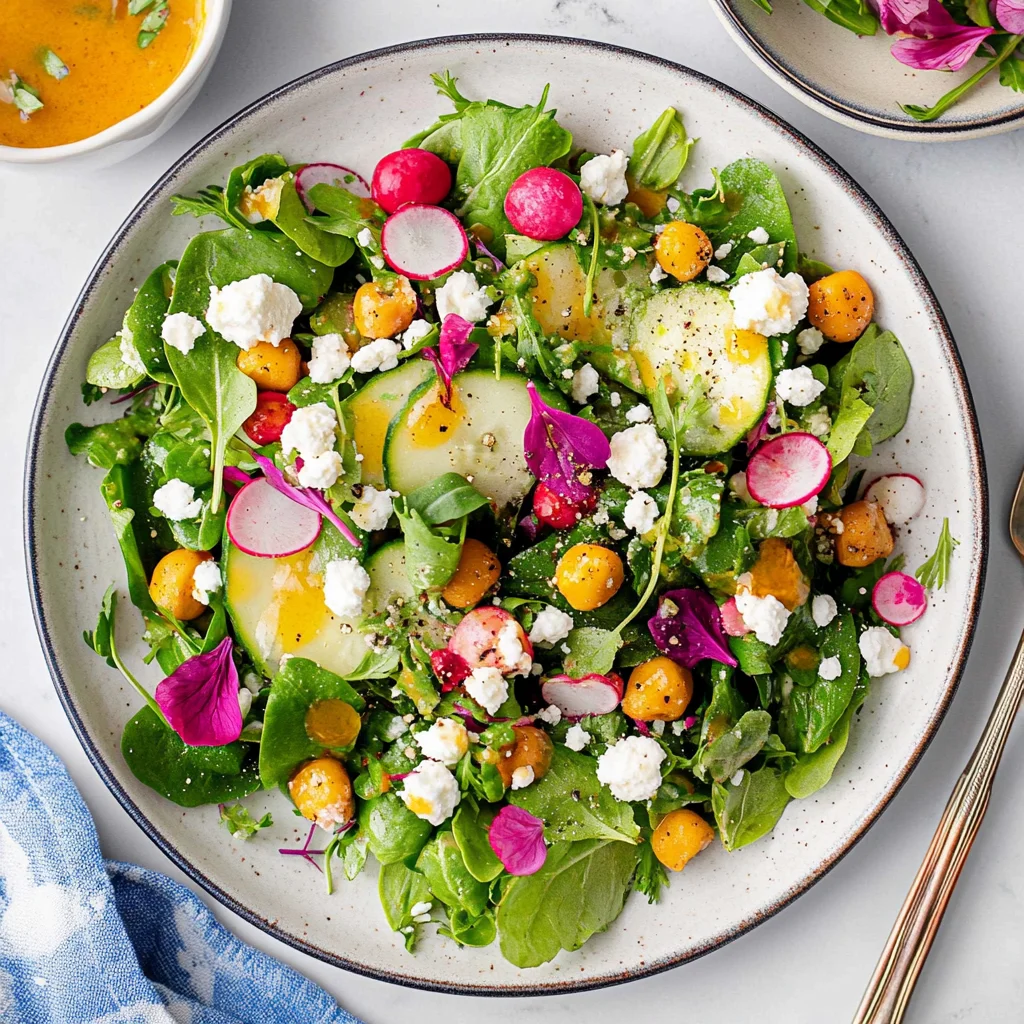
Spring Salad
Ingredients
Method
- In a large salad bowl, combine mixed greens and arugula.
- Add cherry tomatoes, cucumber, and radishes to the greens.
- In a small bowl, whisk together olive oil and balsamic vinegar.
- Drizzle the dressing over the salad just before serving.
- Top with crumbled feta cheese and toasted nuts.
- Gently toss the salad to combine all ingredients.



Leave a Comment